
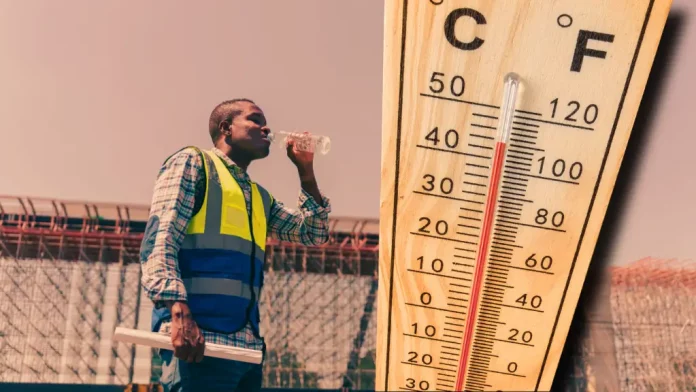
The National Federation of Independent Business (NFIB) is pushing back against heat standards proposed by the National Occupational Safety and Health Administration (OSHA), arguing the rules would impose costly new burdens on small businesses nationwide.
The NFIB, the nation’s leading small business advocacy organization, released a new issue brief outlining what it calls significant compliance costs that would hurt small business owners if the standards take effect.
OSHA says the new standards are needed to keep workers safe. OSHA reports that heat kills an average of 30 workers each year. The agency says nearly half of these deaths occur on a worker’s first day and 70% within the first week.
What the new rules would require
OSHA introduced the Heat Injury and Illness Prevention Standard in August 2024, which applies to virtually all indoor and outdoor workplaces, with limited exemptions. The proposed rule creates a tiered compliance system triggered by temperature thresholds.
At 80°F, employers must provide water, cooling break areas, acclimatization protocols for new and returning employees, and paid rest breaks when needed.
At 90°F, employers must provide mandatory 15-minute breaks every two hours, implement buddy systems, and actively monitor workers for signs of heat illness.
Beyond those operational mandates, employers must develop a written Heat Injury and Illness Prevention Plan, designate a heat safety coordinator, conduct annual training for workers and supervisors, and retain temperature and break records for at least 6 months.
The burden on small businesses
Many small businesses would face high new costs with no clear safety benefit beyond measures already in place, according to the NFIB brief. Owners may need to hire additional staff solely to manage new paperwork, supervision, and record-keeping requirements.
Seasonal businesses could face the steepest challenges. The NFIB says some may shut down entirely during warmer months to avoid mounting compliance costs. Those that remain open would likely pass higher prices to customers or reduce worker wages to offset expenses.
The NFIB also says the rule would unfairly penalize responsible employers who already maintain voluntary heat-safety practices.
What comes next
The proposed rule remained under review as of early 2026 as political and legislative pressure against it continues to mount. The NFIB is calling on the administration to withdraw the rule entirely and urging Congress to pass the Heat Workforce Standards Act, which would block the current proposal and prevent future administrations from pursuing similar regulations.
 ASBN, from startup to success, we are your go-to resource for small business news, expert advice, information, and event coverage.